Best Stress Release Exercises for Bangladeshis — Move the Tension Out
Content verified against peer-reviewed research from NIH/PubMed, WHO, BIRDEM, and ICDDR,B. Named clinical experts are cited throughout each article. For informational purposes only — not a substitute for medical advice. Our editorial standards →
Stress Doesn’t Live in Your Mind — It Lives in Your Body
Stress does not live only in your mind. It lives in your body — in your tight shoulders, clenched jaw, shallow breathing, and restless legs. The most effective way to release it is to move.
Bangladesh’s stress load is real and rising. Traffic in Dhaka. Work pressure. Financial strain. Family obligations. Heat. Overcrowding. The cumulative weight of urban Bangladeshi life is immense — and most people have no deliberate release valve.
How Physical Movement Releases Tension
Dr. Wendy Suzuki, PhD, Professor of Neural Science and Psychology at New York University and author of Good Anxiety and Healthy Brain, Happy Life, has conducted groundbreaking research on how aerobic exercise transforms the brain’s structure and function. Her TED Talk “The brain-changing benefits of exercise” has been watched over 65 million times. Dr. Suzuki’s research confirms that a single workout immediately boosts dopamine, serotonin, and noradrenaline — improving mood and focus for up to two hours post-exercise — while regular exercise increases the size of the hippocampus and measurably reduces cortisol, the primary stress hormone. As she describes it: “Exercise is the most transformative thing you can do for your brain today. A single workout will immediately increase levels of dopamine, serotonin, and noradrenaline.”
🔬 The Science in 30 Seconds: When you are stressed, your body floods with cortisol and adrenaline. Your muscles tense, your breathing shallows, and your heart rate rises. Exercise is one of the only ways to metabolise these stress hormones — to literally burn them out of your bloodstream. Without physical movement, stress hormones accumulate and cause inflammation, poor sleep, anxiety, and eventually disease. Movement is not a luxury. It is a biological necessity.
A 2023 NIH/PMC systematic review (PMC10671255) confirmed that structured exercise interventions significantly reduce perceived stress and anxiety across multiple populations — with aerobic exercise and mind-body practices (yoga, breathing) showing the most consistent and rapid effects. For the broader mental wellness context, read our complete stress management guide for Dhaka life.
The Best Stress-Release Exercises — Ranked by Speed and Intensity
🌬️ 1. Physiological Sigh — Fastest Stress Release in 2 Breaths
All levels
Any space
Discovered by Stanford neuroscientists, the physiological sigh is the fastest scientifically validated stress release available. It works by deflating the alveoli (air sacs) in your lungs that collapse during shallow stress breathing — immediately lowering your heart rate and activating the parasympathetic (calm) nervous system.
How to do it: Take a full deep inhale through your nose. Before exhaling, sniff in a little more air (double inhale). Then slowly exhale everything through your mouth in one long breath. Repeat 2–3 times. You will feel the tension drop within 60 seconds. This works in the middle of a stressful meeting, in Dhaka traffic, or anywhere you need immediate relief.
🧘 2. Box Breathing — 4-7-8 Method
Used by the US Navy SEALs and recommended by leading psychologists, box breathing powerfully activates the vagus nerve and switches off the fight-or-flight response within minutes. Especially effective for anxiety, pre-exam stress, and sleep onset.
Practice this lying in bed before sleep. Most people fall asleep before completing all 4 cycles. See more sleep-supporting techniques in our 7 habits for better sleep guide.
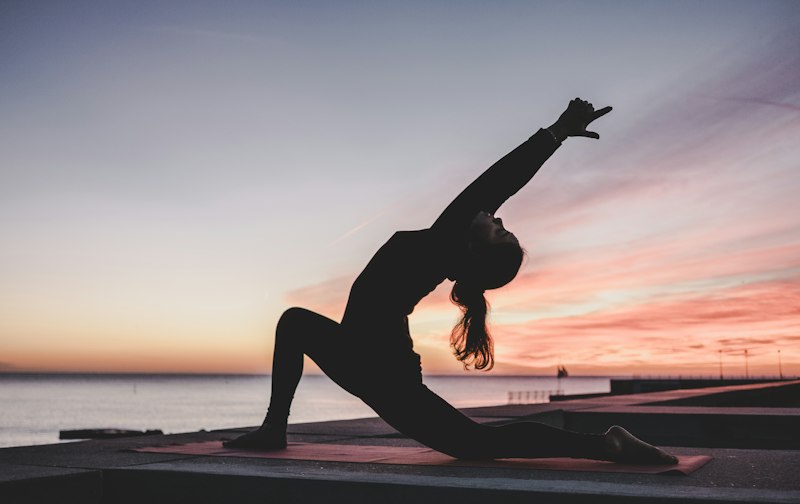
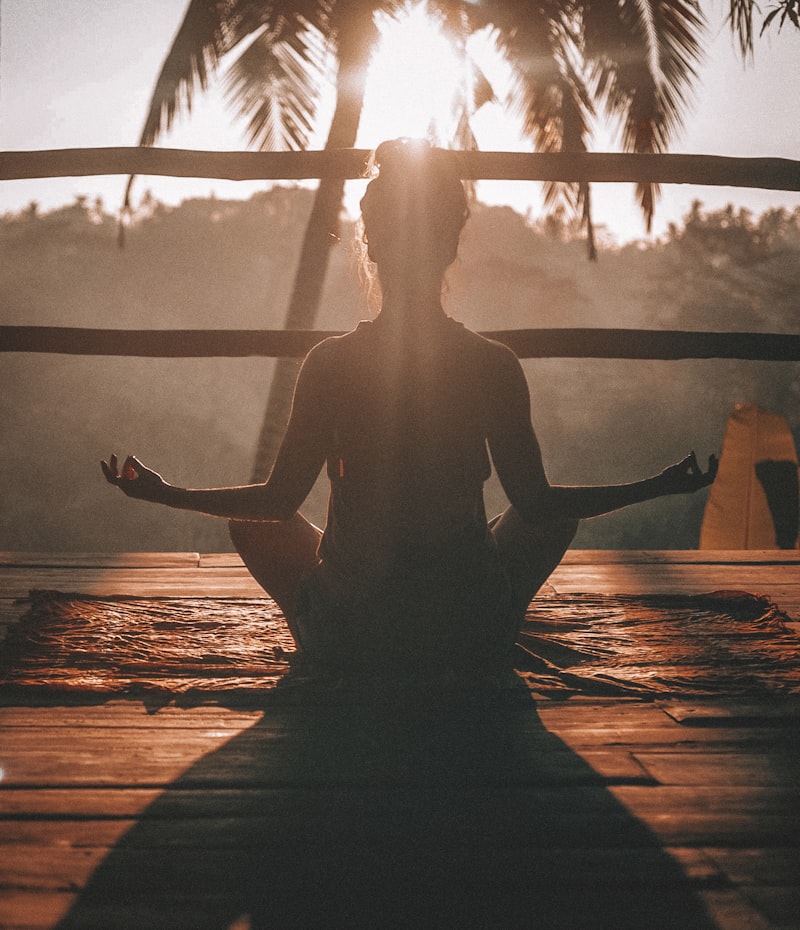
🧘 3. Yoga for Stress Release — 15 Minutes That Change Your Day
Beginner-friendly
Bedroom floor
Yoga is one of the most extensively researched stress-relief interventions. A consistent practice reduces cortisol, lowers blood pressure, and produces lasting improvements in both anxiety and depression. The physical postures specifically release stored muscle tension that accumulates from chronic stress.
Best poses for stress release (no experience needed):
- Child’s Pose (Balasana): Kneel, fold forward, arms stretched ahead, forehead on floor. Hold 60–90 seconds. Releases lower back, hips, and calms the nervous system.
- Legs Up the Wall: Lie on your back, swing legs up against the wall. Reverses blood flow and activates the parasympathetic nervous system rapidly. Hold 5 minutes.
- Seated Forward Fold: Sit with legs extended, gently reach toward feet. Releases the entire back chain — where stress accumulates most in desk workers.
- Supine Twist: Lie on back, draw one knee to chest, let it fall across to the opposite side. Hold each side 60 seconds. Releases spinal tension.
- Savasana (Corpse Pose): Lie completely flat, eyes closed, body fully relaxed. 5 minutes produces measurable cortisol reduction.
Our complete beginner yoga guide for Bangladeshis covers a full 20-minute sequence with detailed explanation of each pose. Equipment: A quality yoga mat makes this much more comfortable — and protects your joints on Bangladesh’s hard tile floors. See our recommendations below.
🏃 4. Brisk Walking — Simple, Free, and Extraordinarily Effective
All levels
Outdoors or rooftop
Walking briskly for 20–30 minutes reduces cortisol by approximately 25%, raises endorphins, and produces a post-exercise calm that lasts 4–6 hours. It is the most universally accessible stress-release exercise — no equipment, no training, no gym fees. Dr. Wendy Suzuki’s research confirms the stress reduction effect is amplified when walking outdoors in a green or open environment. See our outdoor sports benefits guide for the full evidence on nature and cortisol reduction.
The “transition walk”: Walk immediately after work or in the morning before the day’s stress accumulates. This deliberate transition between work and home life is one of the most powerful wellbeing habits available to Bangladeshi professionals.

🏋️ 5. Resistance Training — Burning Stress Hormones Out Fast
Moderate
Home or park
When stress is acute and intense — after a terrible day, a bad argument, or a panic moment — gentle exercise sometimes isn’t enough. High-intensity resistance movement literally metabolises cortisol and adrenaline out of your bloodstream through elevated heart rate and muscular exertion. Dr. Suzuki’s research confirms that resistance exercise increases BDNF (brain-derived neurotrophic factor) — the protein that stimulates new brain cell growth in the hippocampus and directly improves mood resilience.
A simple 20-minute stress-burn routine:
- 3 minutes brisk walking/marching in place to warm up
- Resistance band pull-aparts × 15 reps, 3 sets
- Resistance band squats × 15 reps, 3 sets
- Resistance band rows × 12 reps, 3 sets
- 5 minutes cool-down stretching on your yoga mat
After this 20 minutes, cortisol levels drop significantly and endorphins rise. You will feel noticeably calmer. For a complete home workout programme, see our home gym guide for Bangladesh.
🤸 6. Progressive Muscle Relaxation — Release Tension You Don’t Know You’re Holding
Beginner
Bed or floor
Progressive Muscle Relaxation (PMR) is a clinical technique used in anxiety and stress management programmes worldwide. It works by systematically tensing and releasing each muscle group — creating deep physical relaxation and breaking the chronic muscle tension cycle caused by stress. Many people don’t realise how much tension they are carrying until they consciously release it.
How to do it: Lie on your yoga mat or bed. Starting from your feet, tense each muscle group for 5 seconds, then release completely for 10 seconds. Move upward: feet → calves → thighs → abdomen → hands → arms → shoulders → face. Complete cycle: approximately 12 minutes. Do this before bed for measurably better sleep.
Essential Equipment for Your Stress-Release Practice
The exercises above require almost nothing — but two items make a meaningful practical difference: resistance bands for the high-intensity stress-burn sessions, and a yoga mat for floor work. Both are affordable, compact enough for Bangladeshi apartments, and dramatically increase the quality and consistency of your practice.
Dr. Wendy Suzuki’s research makes clear that consistency is the primary variable: “It’s not the intensity that matters most — it’s doing something every day.” The right equipment removes friction, protects your body, and makes the daily habit feel serious enough to maintain.
⭐ PREMIUM PICK
Fitness Elastic Resistance Bands — Premium Set, Elegant & Non-Slip, for Strengthening, Pilates & Fitness
Budget-Friendly Options in Bangladesh
Resistance bands are the most space-efficient and versatile stress-release training tool available — ideal for Bangladesh’s smaller apartments and flats. This premium set provides varied resistance levels for the full body: upper body pulls and rows target the shoulder and upper back muscles where Dhaka’s office workers and commuters store the most chronic tension. Squats and lower body work with bands activate the large muscle groups that most effectively metabolise cortisol through sustained exertion. Non-slip grip prevents the band from sliding on hands or feet during exercise. Lightweight and compact — fold flat for storage or use on a hotel room floor while travelling. No anchor or door frame required for most exercises. The ACSM 2026 Position Stand confirmed resistance band training produces equivalent hypertrophy and strength benefits to free weights for most muscle groups — making this a clinically validated tool, not just a convenience item.
✓ Multiple resistance levels — full body coverage
✓ Non-slip grip — safe on smooth surfaces
✓ Compact and portable — flat storage
✓ Pilates, strength, flexibility — all in one set
💰 BEST VALUE
Gruper Yoga Mat — Non-Slip, Eco-Friendly TPE, with Carrying Strap, for Yoga, Pilates & Floor Exercises
More Stress-Relief Tools and Tips
Every yoga, PMR, and stretching session in this guide requires a safe, comfortable surface. Bangladesh’s tile and marble floors are hard on knees, hips, and wrists — and slippery enough to make floor poses dangerous without a proper mat. The Gruper mat uses eco-friendly TPE (thermoplastic elastomer) which is non-toxic, odour-resistant, and temperature-stable — important in Bangladesh’s heat where cheaper mats develop an unpleasant smell quickly. Dual non-slip surfaces: textured top for hands and feet grip, non-slip bottom that stays anchored on tile and marble. The included carrying strap means you can easily move between your bedroom, rooftop, or balcony for outdoor morning practice. Lightweight enough to carry to work for a lunch-break stretch session. Compatible with every exercise in this guide: yoga poses, PMR lying sequence, resistance band cool-down, and full Savasana. See our full beginner yoga guide for the complete 20-minute sequence this mat supports.
✓ Eco-friendly TPE — odour-resistant in humidity
✓ Dual non-slip surfaces — top and bottom grip
✓ Carrying strap — portable to rooftop, balcony, office
✓ Works for yoga, PMR, stretching, cool-down
How to use them together: Use the resistance bands for Exercise 5 (the stress-burn session) — 20 minutes of band work metabolises cortisol more effectively than bodyweight-only training. Use the yoga mat for Exercise 3 (yoga), Exercise 6 (PMR), and the cool-down stretching after any session. The combination gives you the complete physical stress-release toolkit in two compact, affordable items.
Your 5-Minute Emergency Stress Release Routine
When you have no time but need relief immediately — in the office bathroom, before a difficult conversation, after a stressful commute:
⚡ The 5-Minute Anywhere Stress Reset
- Minute 1: 3 physiological sighs (double inhale, long exhale). Feel heart rate begin to drop.
- Minute 2: Roll your neck gently left and right. Squeeze both shoulders toward your ears, hold 5 seconds, release. Repeat 3 times.
- Minute 3: Stand and shake your hands vigorously for 30 seconds. Then shake your whole body loosely — arms, legs, shoulders. This literally shakes adrenaline out of the muscles.
- Minute 4: Box breathing — inhale 4 counts, hold 7, exhale 8. Repeat 4 cycles.
- Minute 5: Stand tall, take 3 slow deep breaths, and set one simple intention for the next hour. Your nervous system is now reset.
Supporting Your Stress Response With Nutrition
Exercise is the primary stress-release tool — but what you eat directly affects how your body handles stress biologically:
- Magnesium: Essential for the nervous system’s ability to regulate stress. Deficiency worsens anxiety and muscle tension. Found in badam, palong shaak, dark chocolate. Our sleep guide covers magnesium supplementation for both sleep and stress.
- Ashwagandha (KSM-66): Reduces cortisol by up to 30% in clinical trials. See our complete review in the energy guide.
- Omega-3: Reduces neuroinflammation linked to anxiety. Eat hilsa 2–3 times per week. Full guide: omega-3 and fish oil guide for Bangladesh.
- Foods for mental happiness: Our homemade foods for mental happiness guide covers the full nutritional approach to stress and mood.
🧘 Release the Tension — Starting Tonight
Try the physiological sigh right now. Then, commit to 20 minutes of movement tomorrow morning. Your body is carrying stress it desperately needs to release — give it the opportunity.
Scientific References
- Suzuki, W., PhD. Professor of Neural Science and Psychology, New York University. Research on exercise and brain plasticity, cortisol reduction, BDNF, dopamine, serotonin. TED Talk: “The brain-changing benefits of exercise” (65 million views). wendysuzuki.com
- Guo, P. et al. (2023). Anxiety-Reducing Effects of Exercise and Mind-Body Interventions: Systematic Review. NIH/PMC. PMC10671255
- ACSM Position Stand (2026). Resistance Training Prescription — bands produce equivalent results to free weights for hypertrophy and stress adaptation. 137 systematic reviews, 30,000+ participants. PMC12965823
- NIH/PMC — High cortisol damages hippocampal neurons and synapses; aerobic exercise reverses cortisol-driven hippocampal shrinkage through BDNF release. Multiple references confirming exercise as the primary cortisol-management tool.
- WHO. Global Physical Activity Guidelines — 150–300 minutes moderate aerobic + strength 2× per week for mental and physical health. who.int
This article is for informational purposes only. Consult a qualified healthcare provider before beginning a new exercise programme, especially if you have cardiovascular disease, joint problems, or have been sedentary for an extended period.
Frequently Asked Questions
Frequently Asked Questions
Start with breathing exercises and gentle walking only — no performance pressure, no targets. The goal initially is simply to establish the daily habit of deliberate movement. Fitness comes naturally once the habit is in place. Progress over perfection.
Daily is ideal. Even 15–20 minutes every day produces dramatically better results than one long session per week. The goal is consistent daily stress management, not occasional crisis intervention.
More Stress Relief FAQs
Yes — in fact, exercise is one of the best things you can do during anxiety. It burns through the adrenaline causing the anxious feeling. Start gently (walking, yoga) if anxiety is intense. Intense exercise is safe unless you have a heart condition — in which case consult a doctor first.
Breathing techniques (physiological sigh, box breathing) work within 60–90 seconds — genuinely immediate relief. Brisk walking produces measurable cortisol reduction within 10–15 minutes. Yoga and progressive muscle relaxation show full effects by the end of the session, typically 15–20 minutes. Regular practice creates lasting baseline reductions in stress within 2–4 weeks.



3 Comments