Reviewed for Accuracy • Healthy Bangladesh Editorial Team
Content verified against peer-reviewed research from NIH/PubMed, WHO, BIRDEM, and ICDDR,B. Named clinical experts are cited throughout each article. For informational purposes only — not a substitute for medical advice. Our editorial standards →
Affiliate Disclosure: This article contains affiliate links to Amazon. If you purchase through these links, we may earn a small commission at no extra cost to you. We only recommend products backed by clinical research. | Reviewed against BIRDEM Bangladesh diabetes research, WHO diabetes guidelines, and peer-reviewed clinical nutrition studies.
Managing Diabetes With Bangladeshi Foods: The Science-Backed Approach
Diabetes affects roughly 13.2% of adults in Bangladesh — over 14 million people, with that number expected to nearly double by 2050. If you’ve been diagnosed, or you’re trying to keep prediabetes from progressing, the food on your plate is one of the most powerful tools you have. The good news: a smart diabetes diet doesn’t require expensive imported ingredients. Most of what helps already grows around you.
Dr. Hajera Mahtab, Professor Emeritus of Endocrinology at BIRDEM General Hospital, Dhaka — Bangladesh’s foremost centre for diabetes research and treatment — has spent decades establishing the link between traditional Bangladeshi dietary patterns and blood glucose outcomes. Her clinical experience at BIRDEM confirms that patients who adopt a high-vegetable, high-fibre, reduced-glycaemic-load approach to Bangladeshi eating consistently achieve better long-term HbA1c control than those who follow restrictive Western-style diets that eliminate culturally important foods entirely. Sustainable management requires sustainable eating — and that means working with Bangladeshi food, not against it.
Why Bangladeshis Are More Vulnerable to Diabetes
The “South Asian Phenotype” means Bangladeshis tend to develop insulin resistance at lower body weights than Western populations. Combine that with a rice-heavy diet, urban sedentary lifestyles, and the cultural centrality of sweets at every celebration, and the risk compounds quickly. The most-affected age group is now 30–50 — younger than most people realise.
Diabetes also often walks hand-in-hand with weight gain around the belly. A sound Bangladeshi weight loss meal plan can support blood-sugar control at the same time. The fix isn’t dramatic restriction — it’s swapping high-glycaemic staples for slower-burning alternatives and rebalancing the plate. Our belly fat guide covers the belly-diabetes connection in full.
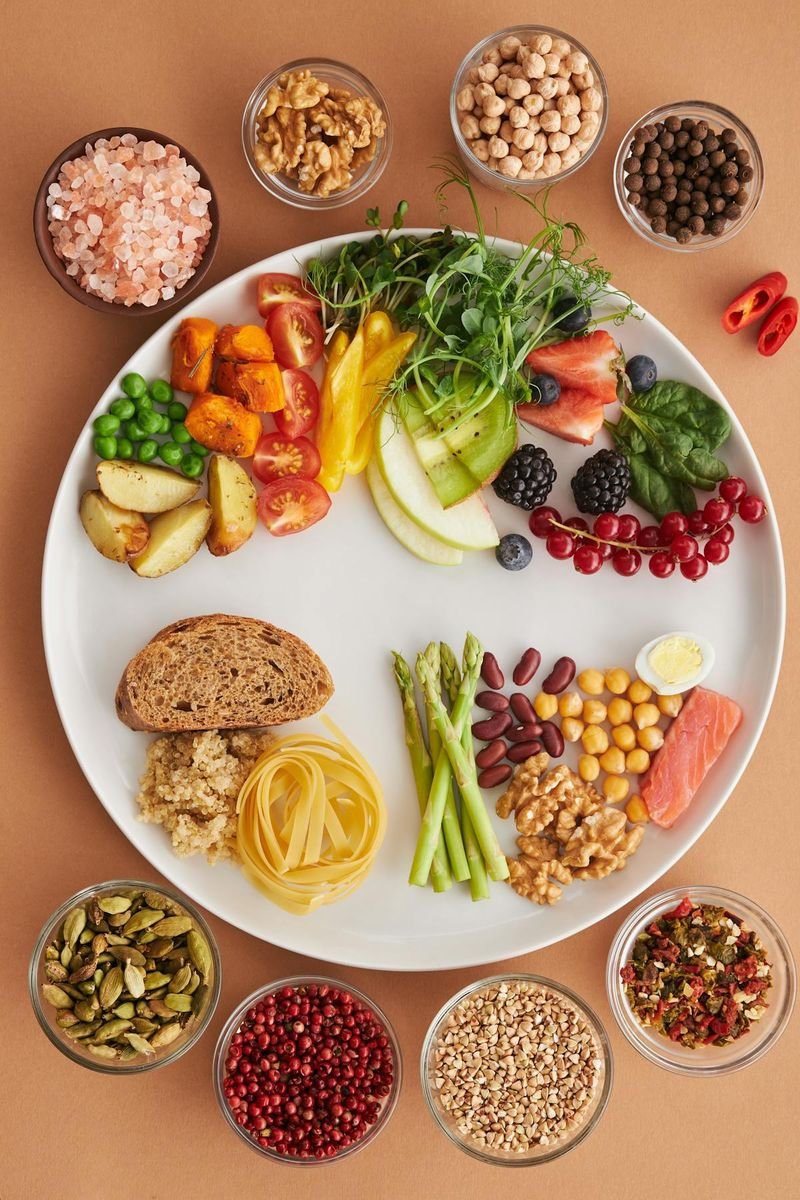
The Diabetes-Friendly Bangladeshi Plate
A simple rule for every meal:
Half the plate: non-starchy vegetables (lau, korola, palong shak, beans)
One quarter: lean protein (fish, eggs, dal, chicken)
One quarter: slow carbs (brown rice, red rice, whole-wheat roti)
This single change can lower post-meal glucose spikes meaningfully without counting calories.
8 Local Foods That Help Manage Blood Sugar
Korola (bitter gourd) — Contains charantin and polypeptide-p, compounds that mimic insulin. The most-cited diabetes food in Bangladeshi traditional medicine, and modern research supports modest blood-sugar-lowering effects.
Methi (fenugreek seeds) — Soaked overnight and consumed in the morning, methi water has been shown in studies to slow carbohydrate absorption.
Dal (lentils) — High in protein, high in fibre, low GI. Mosur, mug, and chola dal all qualify. A go-to for staying full without spiking glucose. See our list of budget-friendly high-protein foods in Bangladesh.
Chickpeas (chola) — Whether boiled or in ghugni, they release sugar slowly and provide steady energy.
Leafy greens (palong shak, pui shak, lal shak) — Almost zero impact on blood sugar, and packed with magnesium, which improves insulin sensitivity.
Brown or red rice — If you can’t give up rice (most Bangladeshis can’t), switching from polished white to red or parboiled rice slashes the glycaemic load significantly.
Cinnamon (daruchini) — A teaspoon a day in tea or curries has been linked in multiple trials to improved fasting glucose.
Small fish (mola, kachki, puti) — High in protein, omega-3s, and calcium, with minimal effect on blood sugar.
5 Foods to Limit or Avoid
White polished rice in large portions — the single biggest spike for most Bangladeshis
Sweets (mishti, rosogolla, sondesh) — even small portions can derail the day
Regular home monitoring is the single most powerful feedback tool for diabetes management. Without it, you are managing blindly — unable to know whether a particular meal, exercise session, or stress event is affecting your blood sugar. BIRDEM clinicians consistently emphasise that patients who monitor their glucose regularly achieve significantly better HbA1c control than those who rely on quarterly lab visits alone.
A randomised controlled trial published in NIH/PMC (PMC7103435) confirmed that consistent self-monitoring of blood glucose, combined with dietary modification, produces significantly better glycaemic outcomes than dietary change alone. Home monitoring gives you the immediate feedback loop needed to understand your own body’s response to specific Bangladeshi foods.
And for sweetening chai, desserts, and cooking without blood sugar impact: a 2024 meta-analysis of stevia published in PubMed (PMID: 39098209) — covering 26 studies and 1,439 participants — confirmed that stevia has a glycaemic index of zero and does not raise blood glucose or insulin levels, making it the safest and most research-backed sugar replacement for people with diabetes.
⭐ PREMIUM PICK
Metene TD-4116 Blood Glucose Monitor Kit — 100 Strips, 100 Lancets, No Coding, Large Display
How to Use Glucose Monitoring Data
A complete blood glucose monitoring kit that includes the monitor, 100 test strips, 100 lancets, a lancing device, and control solution — everything needed to begin home monitoring immediately. No coding required (automatic calibration). Large display is easy to read. Accurate results within 5 seconds. The 100 included strips mean you can test twice daily for 50 days — sufficient to establish your baseline and understand how different Bangladeshi meals affect your glucose. Clinically validated accuracy. For patients who need to test around meals, this kit provides the full infrastructure without needing to buy additional accessories.
Stevia In The Raw — 200 Zero Calorie Packets, No Erythritol, Low Glycaemic Index
Managing Blood Sugar Through Lifestyle
Stevia is the only natural sweetener with a glycaemic index of zero and zero calories — confirmed across 26 studies and 1,439 participants in the 2024 PubMed meta-analysis. Stevia In The Raw is one of the cleanest stevia formulas available: no erythritol, no artificial flavours, vegan, gluten-free, and kosher. Use it to sweeten your morning cha, afternoon tea, cooking, or baking without any blood sugar impact whatsoever. 200 packets provides months of daily use. This is the most practical daily-use solution for Bangladeshis who love sweet tea but need to protect their blood sugar — swap the two teaspoons of sugar in your cha for one stevia packet and you eliminate the most common daily blood sugar spike without giving up the ritual.
How to use your glucose monitor: Test fasting (first thing in the morning before eating), and 2 hours after your largest meal. Target ranges: fasting 4.0–7.0 mmol/L (72–126 mg/dL); 2 hours post-meal below 10.0 mmol/L (180 mg/dL). Record every reading in a log or app and bring it to your next doctor appointment — this data transforms what your doctor can do for your management.
Scientific References
Mahtab, H., Prof. Emeritus of Endocrinology, BIRDEM General Hospital, Dhaka. Research on dietary patterns and diabetes management in Bangladeshi patients. birdem.org
Zare, M. et al. (2024). Effect of stevia on blood glucose and HbA1C: A meta-analysis of 26 studies, 1,439 participants. Diabetes & Metabolic Syndrome, PubMed.PMID: 39098209
Ajala, O. et al. (2020). Effects of stevia on glycaemic and lipid profile in type 2 diabetics: RCT. NIH/PMC.PMC7103435
BIRDEM / Bangladesh Diabetes Association. National diabetes statistics and clinical management guidelines. birdem.org
This article is for general education and is not a substitute for personalised medical advice. Always consult your doctor or a registered dietitian before making changes to a diabetes treatment plan.
Frequently Asked Questions
A Realistic Path Forward
Managing diabetes through food in Bangladesh is more about smart swaps than strict denial. Start with the plate rule. Add korola or methi twice a week. Switch white rice for red rice. Walk after dinner. These small, consistent changes — done with foods you already cook — work better than any imported supplement or extreme diet.
Key Diabetes Research Citations
Does this replace medication?
No. A diabetes diet chart for Bangladeshis works alongside your prescribed treatment — not instead of it. Always discuss changes with your doctor or a registered dietitian before adjusting medication.
How much fruit is safe?
One small serving (a guava, half an apple, a few segments of orange) per day is fine for most people. Avoid ripe mango and banana in large quantities. Vitamin levels matter too — if you’re often tired, check our guide to vitamin D deficiency in Bangladesh, which is closely linked to insulin resistance.
Can I eat rice if I have diabetes?
Yes, but switch to brown, red, or parboiled rice and reduce the portion to half a cup at lunch and dinner. Pair it with vegetables and protein to slow absorption.
📋Written following Healthy Bangladesh’s Editorial Standards — sources include WHO, BMJ & MOHFW 🩺 Reviewed for Accuracy • Healthy Bangladesh Editorial Team Content verified against peer-reviewed research from NIH/PubMed, WHO, BIRDEM, and ICDDR,B. Named clinical experts are cited throughout each article. For informational purposes only — not a substitute for medical advice. Our editorial standards…
Discover the alarming health effects of fast food and junk food on Bangladeshis. From obesity to diabetes and heart disease, learn what you’re really eating and healthier alternatives.
Thyroid disease affects an estimated 1 in 5 people in Bangladesh, yet most go undiagnosed for years. Learn the warning signs, root causes, and the diet and supplement changes that can help you manage thyroid problems naturally.
📋Written following Healthy Bangladesh’s Editorial Standards — sources include WHO, BMJ & MOHFW 🩺 Reviewed for Accuracy • Healthy Bangladesh Editorial Team Content verified against peer-reviewed research from NIH/PubMed, WHO, BIRDEM, and ICDDR,B. Named clinical experts are cited throughout each article. For informational purposes only — not a substitute for medical advice. Our editorial standards…
Magnesium powers 300+ body processes — yet most Bangladeshis don’t get enough. This guide covers the 10 signs of deficiency, best local food sources, the right supplement form, and the evidence on sleep, anxiety, and blood pressure.
Turmeric is in every Bangladeshi kitchen — but almost nobody gets its full benefit. Learn the bioavailability gap, the black pepper fix, and when a supplement is worth it. Built on 12,000+ studies.
To provide the best experiences, we use technologies like cookies to store and/or access device information. Consenting to these technologies will allow us to process data such as browsing behavior or unique IDs on this site. Not consenting or withdrawing consent, may adversely affect certain features and functions.
Functional
Always active
The technical storage or access is strictly necessary for the legitimate purpose of enabling the use of a specific service explicitly requested by the subscriber or user, or for the sole purpose of carrying out the transmission of a communication over an electronic communications network.
Preferences
The technical storage or access is necessary for the legitimate purpose of storing preferences that are not requested by the subscriber or user.
Statistics
The technical storage or access that is used exclusively for statistical purposes.The technical storage or access that is used exclusively for anonymous statistical purposes. Without a subpoena, voluntary compliance on the part of your Internet Service Provider, or additional records from a third party, information stored or retrieved for this purpose alone cannot usually be used to identify you.
Marketing
The technical storage or access is required to create user profiles to send advertising, or to track the user on a website or across several websites for similar marketing purposes.



15 Comments