Getting outdoors to move your body is one of the cheapest and most effective things you can do for your health in Bangladesh — no gym membership, no equipment, just a park, a maidan or a quiet street. This complete guide covers why outdoor exercise matters here, the best activities for our climate and cities, where to do them, how to stay safe in the heat, and how women can exercise outdoors comfortably.
Why outdoor exercise is worth it
Free and accessible — walking, running, cycling and most sports need little or no equipment
Vitamin D — morning sunlight helps your body make vitamin D, which many Bangladeshis are low in
Heart and weight — regular movement lowers blood pressure, improves blood sugar and helps manage weight
Mental health — outdoor activity reduces stress, anxiety and low mood, and improves sleep
Social connection — playing sports or walking with others keeps you consistent and lifts mood
Best outdoor activities in Bangladesh
Walking
The easiest starting point. A brisk 30-minute walk most days improves heart health, blood sugar and mood. Parks with walking loops are ideal, but any safe footpath works.
Cycling
Great low-impact cardio that doubles as transport. Early morning is safest for traffic and heat. A basic bicycle is an affordable one-time investment.
Football, cricket & team sports
Playing on a local maidan burns serious calories, builds fitness and is deeply social. Even a weekly game makes a measurable difference to fitness.
Badminton
Hugely popular in winter, badminton is excellent for agility, reflexes and cardio, and can be played on any flat surface with a net.
Swimming
Where you have safe access to a clean pool, swimming is a superb full-body, joint-friendly workout — especially useful in the summer heat.
Where to exercise outdoors
In Dhaka, popular options include Ramna Park, Chandrima Udyan, Hatirjheel and the many neighbourhood maidans and school grounds. Every city and town has parks, riverbanks, playing fields and quiet early-morning streets. The best place is simply the safe, open space closest to home — proximity is what keeps you consistent.
Exercising safely in the heat and air
Go early or late — exercise before about 9am or after 5pm to avoid the worst heat
Hydrate — drink water before, during and after; add a pinch of salt and lemon on very hot days
Check the air — on high-pollution days (common in Dhaka winter), keep intense exercise lighter or indoors
Dress light — loose, breathable, light-coloured clothing and a cap
Build up gradually — start with 10–15 minutes and increase over weeks
Outdoor exercise for women
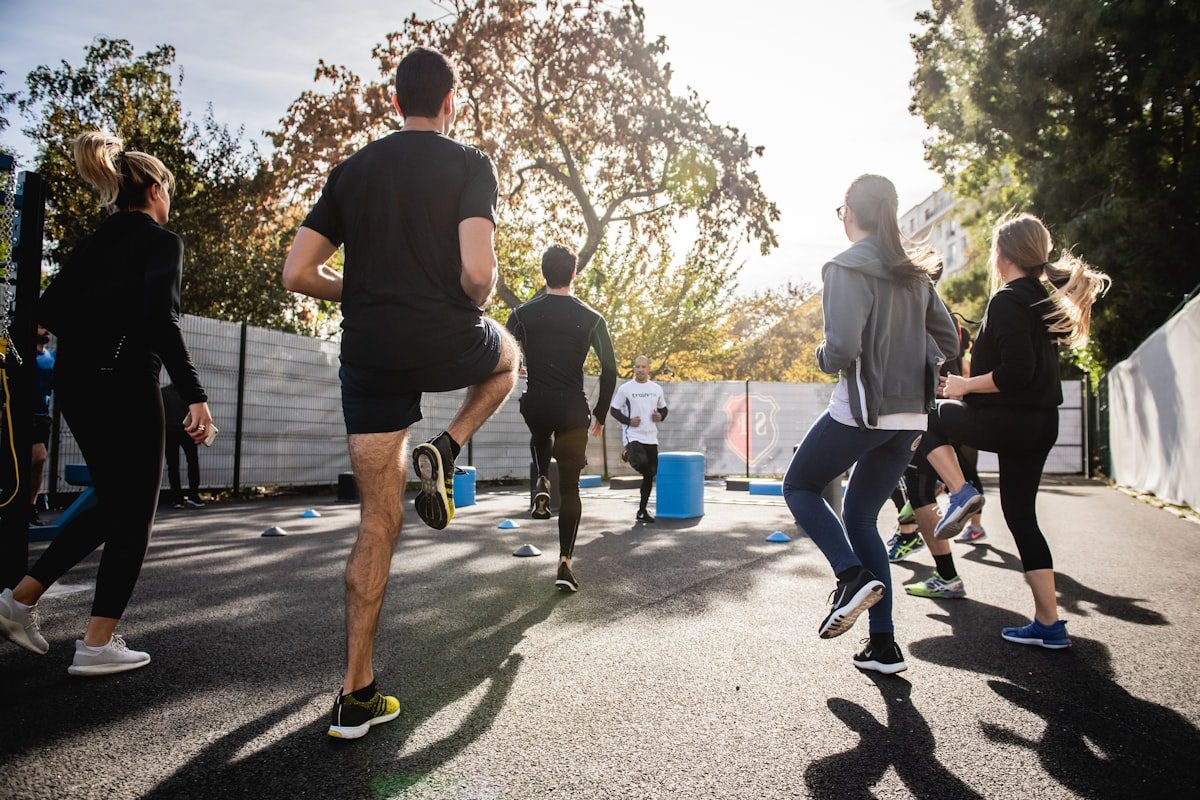
Outdoor exercise is just as valuable for women, and very doable with a little planning. Early mornings in a local park are usually calm and comfortable. Going with a friend, sister or a small group adds safety and motivation, and modest, breathable activewear works perfectly well. Walking, cycling, badminton and group fitness in parks are all popular choices. If a public space ever feels unsafe, a rooftop or courtyard is a fine alternative for walking, skipping or home-style workouts.
A simple weekly outdoor plan
3–5 days: 30 minutes brisk walking or cycling
1–2 days: a sport you enjoy (football, cricket, badminton)
Daily: a few minutes of stretching to stay mobile
Rest: at least one easy day — recovery is part of training
Frequently asked questions
Is it safe to exercise outdoors with Dhaka’s air pollution?
On most days, yes — the benefits of moving outweigh the risks, especially in the morning when air is cleaner. On heavily polluted winter days, reduce intensity or move your workout indoors.
How much outdoor exercise do I need?
Aim for about 150 minutes of moderate activity a week (for example 30 minutes, five days) plus some strength or sport. Anything is better than nothing — start where you can.
This guide is general information, not medical advice. If you have a heart condition, are pregnant, or have been inactive for a long time, check with your doctor before starting a new exercise routine.
Mohammad Ruman is the editor and researcher at Healthy Bangladesh. Every article is personally researched against WHO, ICDDR,B / MOHFW guidance and peer-reviewed medical literature, following our editorial policy. Last updated 14 Aug 2026.
Medical disclaimer: This article is for general information only and is not a substitute for professional medical advice, diagnosis or treatment. Always consult a qualified doctor about your health.
To provide the best experiences, we use technologies like cookies to store and/or access device information. Consenting to these technologies will allow us to process data such as browsing behavior or unique IDs on this site. Not consenting or withdrawing consent, may adversely affect certain features and functions.
Functional
Always active
The technical storage or access is strictly necessary for the legitimate purpose of enabling the use of a specific service explicitly requested by the subscriber or user, or for the sole purpose of carrying out the transmission of a communication over an electronic communications network.
Preferences
The technical storage or access is necessary for the legitimate purpose of storing preferences that are not requested by the subscriber or user.
Statistics
The technical storage or access that is used exclusively for statistical purposes.The technical storage or access that is used exclusively for anonymous statistical purposes. Without a subpoena, voluntary compliance on the part of your Internet Service Provider, or additional records from a third party, information stored or retrieved for this purpose alone cannot usually be used to identify you.
Marketing
The technical storage or access is required to create user profiles to send advertising, or to track the user on a website or across several websites for similar marketing purposes.